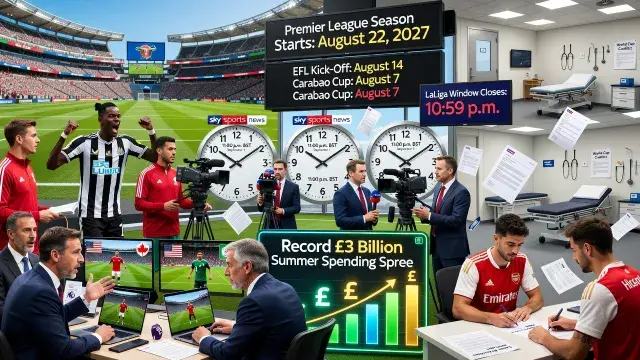
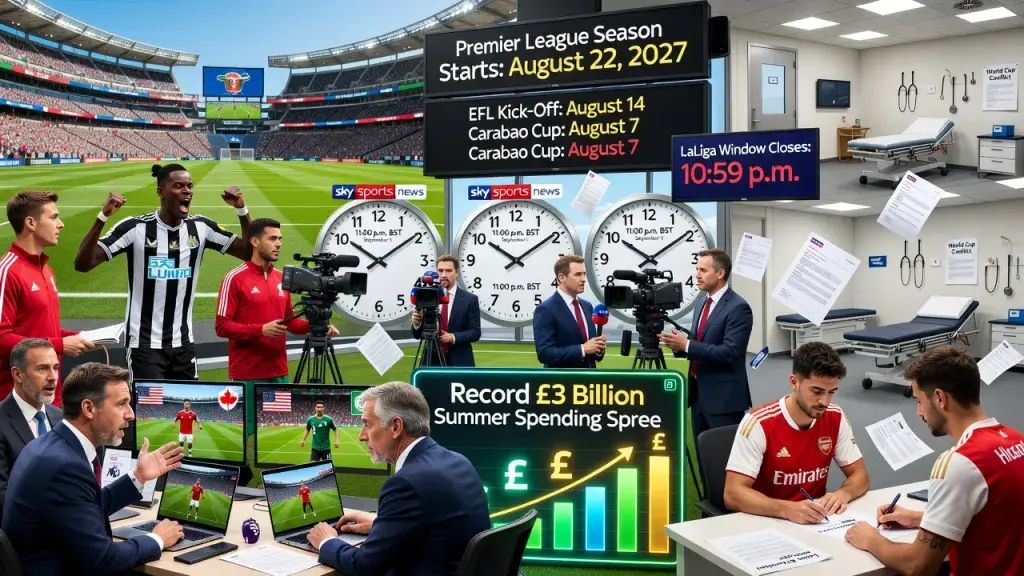
English football's summer transfer window is open for business, but clubs up and down the pyramid face a complication they have not navigated in four years: a World Cup running almost entirely inside the transfer period. With the tournament in the United States, Mexico and Canada underway from June 11 until July 19, sporting directors across the Premier League and EFL must pursue targets who are simultaneously competing on the biggest stage in international football, making negotiations and medical examinations considerably harder to arrange.
The scale of English clubs' ambition in the transfer market has grown dramatically in recent seasons. Premier League spending surpassed £3 billion last summer - an all-time record - with Liverpool emerging as the division's biggest spenders after securing Alexander Isak from Newcastle in a late, high-profile deal. That kind of late-window activity has become something of a tradition at elite level; supporters old enough to remember Anfield folklore will recall how cult moments are built across Merseyside derbies and knife-edge finishes, much like those celebrated in the origi six account of Divock Origi's legendary contributions against Everton. Whether clubs can replicate that sort of decisive late business this summer will partly depend on how quickly their targets return from North America.
The window officially opened on Monday June 15, though deals agreed prior to that date could not be registered until then. Some arrangements were already in place from last summer's loan structures - Arsenal's Piero Hincapié, who spent the 2025-26 campaign at the club on loan, represents exactly the kind of pre-arranged deal that sidesteps the World Cup disruption entirely. For clubs without such contingency plans, however, the coming weeks will demand patience and logistical creativity in equal measure.
Deadline Day Returns to 11 p.m. - and the Window Stays Open Late
After two summers in which Deadline Day closed at 7 p.m. BST - a move designed to improve working conditions for those employed across football administration - the window will now slam shut at 11 p.m. BST on Tuesday September 1. Clubs will be granted a two-hour grace period beyond that cut-off, provided paperwork has been submitted before midnight. Sky Sports News will carry live television coverage in the United Kingdom throughout the day. It is a later finish than staff will have grown accustomed to, and given the volume of business likely to be conducted in the World Cup's aftermath, a frantic close to proceedings feels inevitable.
The Premier League is not the only league to close on September 1. Spain's LaLiga shuts at 10.59 p.m. the same night, while Serie A closes at 7 p.m. The Bundesliga and Ligue 1 both shut 24 hours earlier on August 31 at 7 p.m., meaning German and French clubs cannot bring in new players after that point - but they remain vulnerable to losing players to leagues whose windows remain open. MLS and the Dutch Eredivisie stay open until September 2, Türkiye until September 4, and the Saudi Pro League does not close until October 12, meaning Premier League clubs could theoretically lose players to Riyadh well into the autumn.
Season Dates Shaped Around the Tournament
The broader football calendar has been adjusted to absorb the World Cup's impact. The new Premier League season begins on August 22 - a week later than last season - to allow players returning from North America adequate recovery time. The EFL kicks off earlier, on August 14, with the Carabao Cup first round beginning on August 7. Premier League fixtures for 2026-27 were published on June 19, with EFL clubs receiving their schedules on June 25. The Premier League season is scheduled to conclude on May 30, 2027, a week before the Champions League final.
For Women's Super League clubs, the transfer window runs on a slightly different timetable: it opened on June 18 and closes on September 3, giving WSE clubs a fractional extension beyond their male counterparts. The overlap between a record-breaking transfer market and a global tournament on a new continent makes this one of the more complex summers English football has managed in recent memory. Clubs that planned early and structured their recruitment around the World Cup calendar will have the clearest advantage when business gets done.